Ceiling Leak and Water Stain Drywall Repair in Pikesville
Water is gentle at first and then expensive in its effects, so the order of steps matters. Stop the water, let things dry, then rebuild; here is the reasoning behind each one.
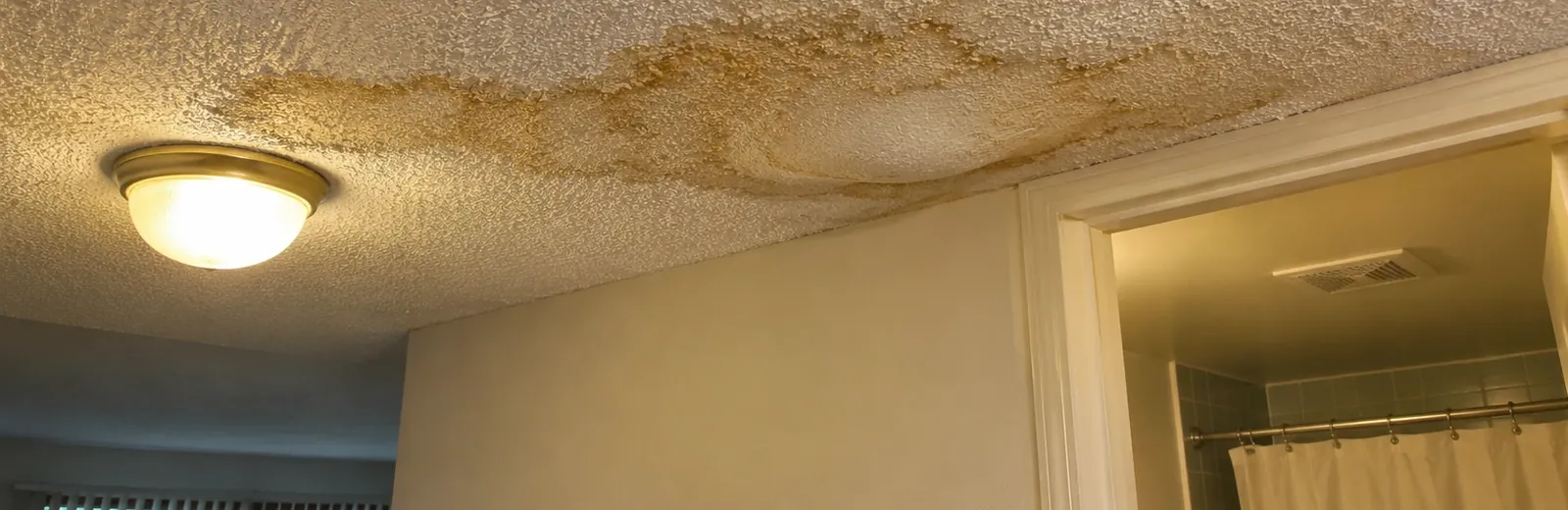
What a stain is telling you
A stain is a map. The dark center is usually where water came through, and the lighter ring shows how far it spread. Water travels along the top of the ceiling and drips at the lowest or weakest spot, which is often not where the leak started.
That is why we never judge by the stain alone. We look at the edges, press gently to feel whether the board has softened, and ask when the stain first showed. A dry brown ring may be an old leak that stopped years ago, and a damp one is a leak that is still active.
Where the water usually comes from
- A bathroom above, where a tub seal, a toilet connection or a supply line has failed.
- A roof, where shingles, flashing or a vent boot has let rain in during a storm.
- A pipe inside the wall or ceiling that has a pinhole or a loose fitting.
- A condensation line from an air handler or similar equipment.
- Winter ice and thaw cycles, which push meltwater under roofing edges.
Stop first, then cut
First, the water must stop. We repair drywall; we do not fix pipes or roofs, so a plumber or roofer usually comes before us. Fixing a ceiling under an active leak is like mopping a floor while the tap is still running.
Then we cut out the wet or soft board. We keep the cut square and a little larger than the stain, so the new piece has solid edges to meet. If the framing is damp, we wait for it to dry before closing it up, since trapped moisture can ruin new board.
If you see dark spotting, or the area smells musty, please have a qualified mold specialist take a look. We do not test for or remove mold, and we will not pretend a coat of primer is a treatment for it.
Why a stain bleeds through paint
Ordinary paint is thin and a little see-through, and a water stain contains tannins and minerals that dissolve and rise into fresh paint, the way tea soaks into a white tablecloth. You paint, it looks fine for a day, and the ring returns.
The cure is a stain-blocking primer over a repaired, fully dry surface. Painting over damp board with the wrong primer is the usual reason a stain comes back, so we confirm the ceiling is dry first.
Our steps for a ceiling repair
- Look, press and measure the affected area.
- Cut out the wet or soft board and leave the area to dry.
- Fasten a new piece of board to the framing.
- Tape and coat the seams in thin layers.
- Sand, prime with a stain-blocking primer, and leave the ceiling ready for paint.
Before we arrive
- Place a bucket under any active drip and keep the area clear of valuables.
- Arrange for the leak to be fixed before our visit.
- Photograph the stain and note when it appeared.
A few quick questions
Can you just paint over a water stain?
Painting alone usually fails, because the stain rises back through. A stain-blocking primer on a dry, repaired ceiling is the dependable way.
Do you deal with mold?
No. If you suspect mold, a qualified specialist should check it. We replace damaged board once the cause and any concern have been handled.
How do I know the ceiling is dry?
We check by feel and by looking at the framing. If you are unsure, tell us and we will wait until it is.